Showing posts with label Wilkie Collins. Show all posts

Thursday, January 20, 2011

Science and Pseudoscience in The Moonstone

The Moonstone offers an interesting mix of the scientific and the mystical. It is worth noting that Victorians were inhabiting a time in which both science and various researches into parapsychology were both prevalent and that sometimes little distinction was made between the quality of research or legitimacy of either. In fact the two texts Ezra Jennings offers as support for his experiment are Carpenter's Human Physiology and John Elliotson's Human Physiology. Critics Jenny Bourne Taylor and Alison Winter have pointed out that thought the titles are are the same Carpenter was a respected psychologist awhile Elliotson was a marginalized advocate of mesmerism.

Somnambulism (sleep-walking), animal magnetism (from the French term Mesmer used to refer to the magnetic animating force which animates both humans and animals), Mesmerism (from Franz Mesmer a German doctor who believed energy could transfer between animate an inanimate sources, phrenology (which involved reading bumps on the skull) and clairvoyance (from the French words for clear and seeing was referred to second senses) were all areas of research and public interest.

(Just for fun (though it is quite a bit later than the Collins novel) a 1903 volume: Complete Hypnotism, Mesmerism, Mind-Reading and Spiritualism by A. Alpheus for those who might want to try some table-tipping or mind-reading at home).

All of these are of particular interest to The Moonstone since both are used in the solving of the mystery. We have examples of early forensic evidence: the smeared paint on the door, the garment that smeared the paint, the footsteps in the sand, a gold thread are all key to deciphering the mystery. Also the collection of testimony and each character being limited to his or her personal knowledge rather than relying on heresay have become such mainstays of mysteries and police procedural dramas that as a modern audience we hardly notice them.

It is also worth noting Collins interest in spiritualism. He claimed he was frequently mesmerized by one of his mistresses, Caroline Graves, to ease his pain. He recounted his experiences including magnetized glasses of water and 'sensitives' seeing the future in an article called "Magnetic Evenings at Home" which ran in The Leader.

At the same time, there is a great interest in science. Darwin's The Origin of Species was published in 1859. Trains were revolutionizing the existence of Londoners, new anaesthetics like ether and chloroform would replace hypnosis as a form of anaesthesia.

This duality that runs throughout the story allows Collins to have it both ways. The celebrated detective can trace the time the paint was smeared, but the moonstone might be cursed. An important step in solving of the mystery is a controlled experiment in sleep waking and talking under the influence of an opiate. It is both a scientific experiment and questionable, as is expressed by both Cuff and Betteredge. This layering makes of levels of mystery that resound on a more psychological level.

Monday, December 27, 2010

Women's Roles in Collins


I saw a lovely run through of The Moonstone right before the holiday break and I have been thinking about the women's roles.

I have always found women in Collins novels to be more assertive than one would expect from a Victorian novelist, which might speak to our misconceptions about Victorian women, but in particular Collins shows women acting forcefully on their own behalf which makes them feel very modern.

Lady Julia Verinder is clearly a force to be reckoned with. She is a long time widow she runs her esta
te. She has shunned a brother because of his questionable morals. She has taken pains to make sure that her estate is protected for her daughter. This is no small feat given the complexity of inheritance laws during the era and the favoring of male family members or husbands in how property was dispersed and controlled.

Additionally, Lady Verinder has been hiding a serious illness. Most critics feel the strange turn the novel takes about Lady Verinder's health issues is tied his own mother, who became sick and died while Collins was writing The Moonstone. His grief over his mother influenced the strength with which she is depicted and described. (Rachel with her mother as Godfrey Ablewhite and Miss Clack look on in the Arthur Fraser Illustration above.)

Rachel Verinder is much like her mother. She bears the brunt of public accusation and scorn both for the moonstone and a broken engagement. She conceals information to protect those she loves even at great personal expense. What interests me particularly about Rachel is the loss of identity she experiences when she discovers someone to have been untrue. In a complex intellectual move she experiences a diminution in herself because she failed to have the good judgement to make good decisions about others. (Rachel Verinder confronting Franklin Blake in another Arthur Fraser illustration at left.)

She also reminds me of another heroine in the Collins novel The Law and The Lady. Published in 1875 it follows the adventures of Valeria Brinton who discovers that her new husband married her under a false name. She further learns that her husband had a Scottish verdict of "not proven" in a trial on the murder of his first wife. When her husband flees in disgrace Valeria turns detective to prove her husband innocent and save their marriage. Similarly, Rachel is willing to shun convention to protect those she loves.

Collins is also interested in the plight of working class characters and that ambiguous class of genteel poverty in which Miss Clack resides.

Rosanna Spearman we are told from the outset has had a difficult life and been a thief and in an institution for reform. Many Victorian reform institutions for women were for prostitutes. While Rosanna is specifically identified as a thief she expresses a very un-Victorian trait, an open expression of her love and desire for a man who is her social superior. Spearman also works to conceal information for one whom she cares about. She is plain and has dealt with both the difficult unmentioned childhood and almost complete isolation from her fellow servants in the household in Yorkshire. The combination of both the lack of resources available to her and the tragic bravery she shows in the story are meant to give us both a critique the circumstances that led to her situation and evoke sympathy from the reader or audience.

Miss Clack is a delightful narrative voice in that she provides a complete contrast to Betteridge and her language, peppered with religious platitudes and moral aphorisms and her entirely different view of certain members of the family lets us clearly know we are in the world of first person testimony and that while the various narrators will stick to what they know their opinions will be colored by their prejudices. Clack is also a figure that was problematic to the Victorians and later eras. She is an extra woman, raised to be in the upper classes but not married off because of either lack of funds or lack of interest. Now beyond the age of marriage the question remains of what these women are to do, particularly women with diminishing incomes and a class based desire not to engage in work. Clack, like so many other single women turns to charitable work as she herself relies on charity from her wealthier family members.

It is important to consider that although Clack is a figure of fun in the novel. Women's groups were responsible for campaigning for many noble causes including stricter labor laws, particularly child labor, women's suffrage, and the anti-slavery movement. It was the growth of schools (championed by many of these women) that led to wider literacy that gave Collins a broad reading audience for his serialized works. So while Clack with her tracts is certainly humorous it is important to think of her in context in a world that would have had deep limitations for her because of her upbringing, her modest circumstances and the roles available to her as a woman.

Thursday, December 16, 2010

Colonialism and Revolution in The Moonstone


One of the interesting things in thinking about The Moontstone and watching the development of the script as Rob has gone through drafts is how we think about the characters of the Indians as they appear in Victorian England and the history of the moonstone.

What surprised me about The Moonstone when I first read it is that Collins seems to show sympathy for the Indians about original theft of the stone from the statue of the moon god. It may be of interest to know that while Collins does not name the god the description fits with that of Chandra also sometimes known or combined with the god Soma. He pulls the moon across the sky in his chariot and is sometimes depicted riding on an Antelope. He is also a fertility god and associated with vegetation.

While Collins seems to rely on the exoticized east to use the three Indian travelers to create a sense of mystery and fear surrounding their presence in relation to the moonstone.


The status of the stone is already fraught. It has been stolen from the statue city of Somnauth and by a string of thefts and murders has ended up in a cache of stolen gems of Tipu Sahib. The story we are given about how Colonel Hearncastle killed (dishonorably) to possess the stone depicts the ugliness of colonialism and the looting that occurred throughout the British control of India. The stone inherited by Rachel Verinder is stolen goods and taken through violence.

A sense of sympathy is created for the three Indians, whom, we are told by the traveler Murthwaite, have forsaken home and caste to retrieve the stone. Collins also doesn't discount or minimize the mysticism of the Indians or any potential mystical associations with the stone. The Indians practicing scrying, looking into the future in a pool of ink is taken seriously by all but Betteredge. The fears many characters voice over the curse associated with the stone are again taken seriously so the Indians are not belittled as superstitious in comparison to the English.

At the same time it is difficult not to grapple with the fact that to a modern audience any depiction of three Indians in England at this time can seem racially charged, something I think Rob's adaptation goes to great pains to minimize. Ultimately the story is not about the fears of the other, the foreign. The fears and mystery lie in the actions and motivations of the family. One feels the stone might be best with the Indians as a form of restitution.

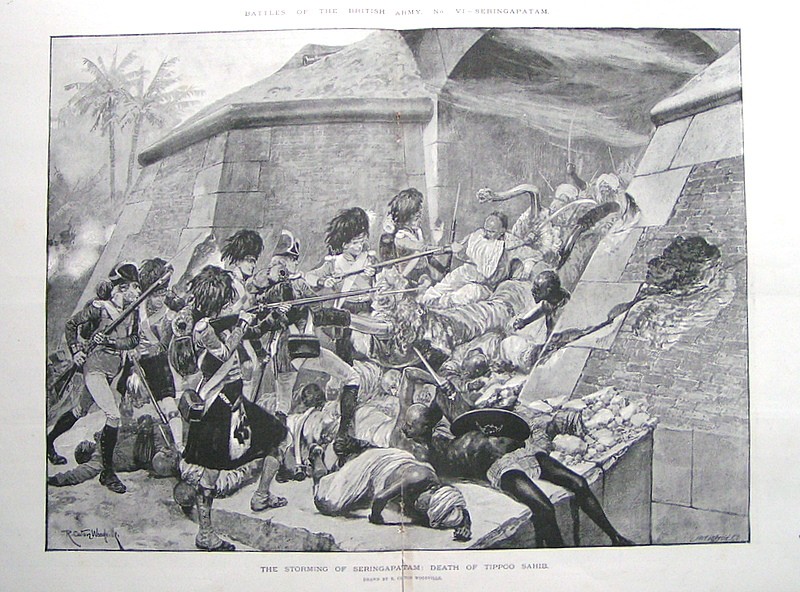
However, I don't want to minimize what Collin's audience would have known about British History in India. "The Storming of Serringpatam" in 1799 in which the stone is taken was a major British victory that ushered in the time of British rule in Southern India (and extended the reaches of the East India Company) in ways that were brutal to the local population. The novel is set in 1848 which is a year of revolutions in Europe (which colors and adds danger to Franklin Blake's European travels). It is also the year of Chartist demonstrations in London where many in the working classes rallied for reforms. Readers would have been aware of the cultural shifts and unrest in both England and abroad. Property, ownership, class and entitlement were not as solidly entrenched as they might have seemed.

Collins reading audience would have known of the earlier battle but also of the recent 1857 Sepoy Rebellion in which Indian troops near Delhi rebelled brought about the dissolution of the East India company in striking contrast to the time at which the gem was taken. Many of Collins' contemporaries referred to horrors inflicted on the English during this time period to portray Indians in a brutal and negative light which Collins seems to avoid but at the same time his readers would have read newspaper accounts about the violence of the Indian uprising and might have been prepared to view the three Indians as figures of fear.

Murthwaite is an interesting comparison to this. His presence in the story is because he is a noted traveler and valued for the conversation he will bring to the various dinner parties he attends when he is not traveling the world. He also acts as an interpreter for the actions and the language of the Indians for the other characters in the story. One source for the character of Murthwaite is John William Shaw Wyllie an Anglo-Indian traveller whom Collins would have met at his club. He also likely referred to the books Talboys Wheeler's The History of India and the Life of Sir David Baird by Theodore Hook.

Wednesday, November 17, 2010

Opium Eating and The Moonstone


The use of opium is featured in several of novels by Wilkie Collins including The Moonstone. Collins was also a user of opium both in laudanum and injections. It is important however to understand that opium was widely used in England at this time as a medicinal remedy. Although Doctors and chemists widely disagreed about both its uses and it the physiological response to the drug it was accepted for use in the home and was not considered a source of shame or moral failing or addiction as an illness in the same way as modern drug use.

Opium is used in a variety of forms all of which are derived from the sticky white juice taken from the opium poppy. It can be prepared in a variety of forms. During the time period it was smoked in pipes, and injected as morphine but most often it was prepared in a brownish/red liquid tincture in alcohol known as laudanum.

Laudanum was widely available and inexpensive in chemist shops in even the smallest English villages. It was commonly given to sooth fussy children and infants. It was sold under a wide variety of names including: Batley's Sedative Solution, Dalby's Carminative, Godfrey's Cordial, McMunn's Elixir, and Mother Bailey's Quieting Syrup for which an advertisement is pictured at left. It was given as a tonic or cure a wide range of illnesses including colds, cholera, hay fever, insomnia, tuberculosis, nervousness, headaches, gout and rheumatism.

In Opium and the Romantic Imagination, Alethea Hayter says that,"Laudanum was cheaper than beer or gin, cheap enough for even the lowest-paid worker." Further in the same work, a chemist in a small Lancashire parish is cited as selling 200 pound of opium per year and a chemist in Thorpe is described as telling Coleride he sold two to three pounds of opium and a gallon of laudanum every market day.

Wilkie Collins saw his father taking "Bately's Drops" to ease the pain of heart disease before his death. When Collins began to suffer symptoms of rheumatism and gout as well as eye pain he began taking laudanum to ease the pain. He would be a lifelong user of laudanum. As his tolerance for the opiate increased so did his dosages. Late in life Collins was taking doses that would have killed a normal person. At a dinner party, he apparently asked the surgeon Sir William Fergusson to verify his claim and Fergusson told the dinner party that the amount of laudanum Collins took nightly was sufficient to kill every man at the dinner table. Collins also received occasional injections of morphine for pain.

Collins seems to have both resented and romanticized his need for laudanum. He claimed he took laudanum "To stimulate the brain and steady the nerves," but he advised his friend Hall Caine against taking it himself. He felt he needed it to bear the pain he suffered but he was also aware of the associations laudanum had with numerous writers. Thomas De Quincey's Confessions of an English Opium-Eater was published in 1821. The use of opium by authors such as Samuel Taylor Coleridge and Charles Baudelaire was also well-known.

Walter Scott claimed to have written part of The Bride of Lammermoor (a novel particularly admired by Collins) while he was under the influence so that when he read it he did not recognize the story as his own. Collins may have remembered this story when he told a similar story about writing The Moonstone. Collins claimed that his pain was so great that he had to dictate the story and that he went through several secretaries before he found one who would ignore his cries of pain. It is clear from the manuscript that some of the pages are written in a different hand. Collins also claimed that he was "pleased and astonished" by the end of The Moonstone but did not recognize it as his own work.

"If I had only myself to think of, I should prefer the sharp pain to the frightful dreams." - Ezra Jennings, The Moonstone

The character of the Doctor Candy's assistant, Ezra Jennings, in The Moonstone is also an opium user many critics have seen him as the voice of Collins speaking when he describes the effects of the opium that keeps him from pain but gives him terrible nightmares. Collins did not describe nightmares as part of the effects of his laudanum use but he did describe waking hallucinations including the feeling that someone was standing behind him, ghosts on the staircase who wanted to push him down and a green woman with tusks who said goodnight by biting his shoulder.

Collins personal experience with laudanum is also represented in his descriptions of the experience of being under its influence which is key in both The Moonstone and his other novels including No Name and Armadale.

Sources: Opium and the Romantic Imagination, Alethea Hayter and Wilkie Collins, An Illustrated Guide, Andrew Gasson

Friday, November 12, 2010

Wilkie Collins: Beyond the Veil of Domesticity

In thinking about the complex web of interpersonal relationships in The Moonstone it is inevitable that one should look at the complicated in writing about Collins to look at the mysteries of his personal life.

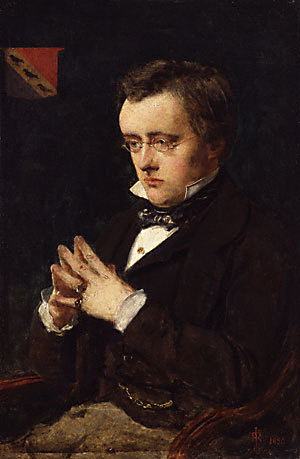
William Wilkie Collins was the son of Harriet and William Collins. His father was a successful landscape painter and member of the Royal Academy. Initially, making a living as an artist was difficult and the Collinses financial circumstances were precarious for a time before successful commissions and patronage assured the Collins family of a respectable living. Collins was named after his godfather His father was conservative and very religious, traits Collins would seem to rebel against in his own more Bohemian adulthood. (A young Collins in a portrait by Millais at right.)

Collins was had a bulge on one side of his forehead and was nearsighted from childhood, wearing glasses most of his life.

His education was patchy with time at Maida Hill Academy and travels in France and Italy with his family when he was twelve and thirteen years old. He considered his time in Europe the best part of his education. He finished his education at a London boarding school where he began telling stories to please a school bully.

He worked at Antrobus & Co., a tea merchant. Collins hated the work and used much of his time to write stories. Much of his experiences here would reappear fictionalized in his novel, Hide and Seek. He read law at Lincoln's Inn in May 1846.

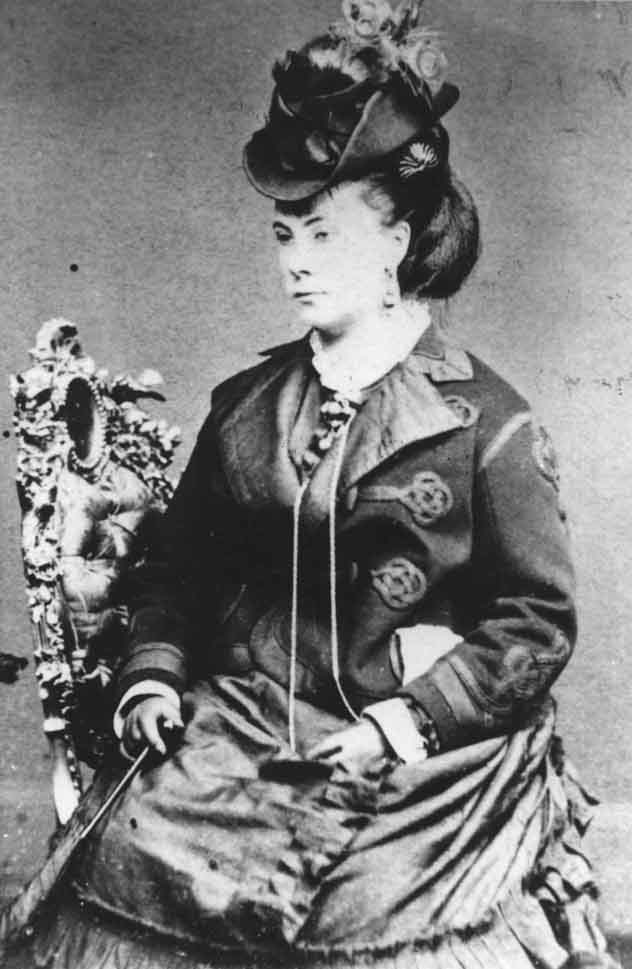
Collins maintained two households with women to whom he was not married, Caroline Graves and Martha Rudd. In 1858, Collins was living with widow Caroline Graves and her seven year old daughter from her first marriage Harriet bu

t called Carrie. Collins paid for Carrie’s education and when she was older she would often serve as his secretary. She made Collins life comfortable, though Dickens apparently referred to her as “the female skeleton” in the house. Some accounts describe his meeting with Caroline Graves as the inspiration for the opening of his novel, The Woman in White, but the stories are not confirmed. Collins and Graves would live together unmarried except for a brief two years when Graves married Joseph Clow. The marriage was likely in response to Collins new relationship with Martha Rudd or because he still did not want to marry Graves after his mother's death removed the excuse of her potential objection to the marriage. After two years Caroline abandoned her marriage to Clow and she and Collins lived as before. (Caroline Graves at right)

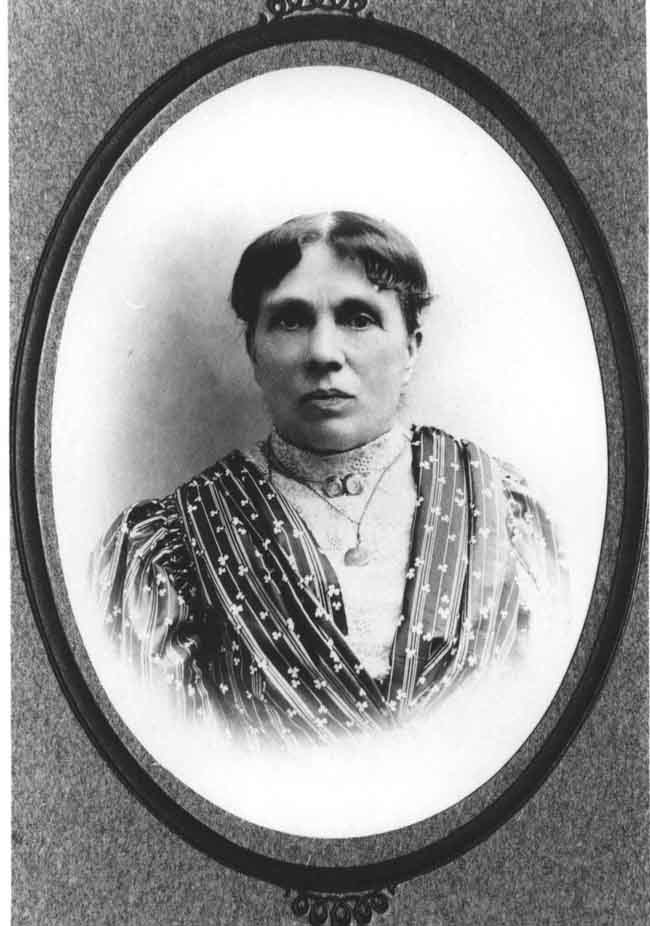
Collins was forty when he likely met nineteen year old Martha Rudd who was working as a servant in an inn where Collins vacationed. He brought her to London where she lived as Mrs. William Dawson and bore Collins two daughters Marian and Harriet and a son, William. (Martha Rudd at left)

The Martha Rudd and her children lived as Mrs. Dawson and the children used the name Dawson. They always lived within walking distance of Collins and Graves and the women knew of each other and the Dawson children were welcome in both homes.

Collins provided for both his families in his will. However, Carrie had married Henry Powell Bartley who served as Collins solicitor for the estate. His extravagant lifestyle decimated the inheritance that Collins had intended to secure his two families. It is notable that Collins, whose novels focus on revealing the uncomfortable realities underneath the familial structures should refrain from any traditional family structure himself.

Sources: Wilkie Collins An Illustrated Guide, Andrew Gasson; Wilkie Collins: Women Property and Propriety, Philip O'Neill; Introduction Oxford World's Classics Edition of The Moonstone and Introduction Penguin Classics Edition of The Moonstone